

Spatial Awareness: What It Is, How It Works and What Its Impact

Sophia Woods Editor / Nov 20, 2025
Did you ever park parallel with ease into a small space, stand agog as a dancer precisely gets through a choreographed sequence, or even just neatly packed a suitcase with not an inch left over? You've just witnessed spatial awareness in action.
Reviewed by Ron Spinabella, Editor in Chief


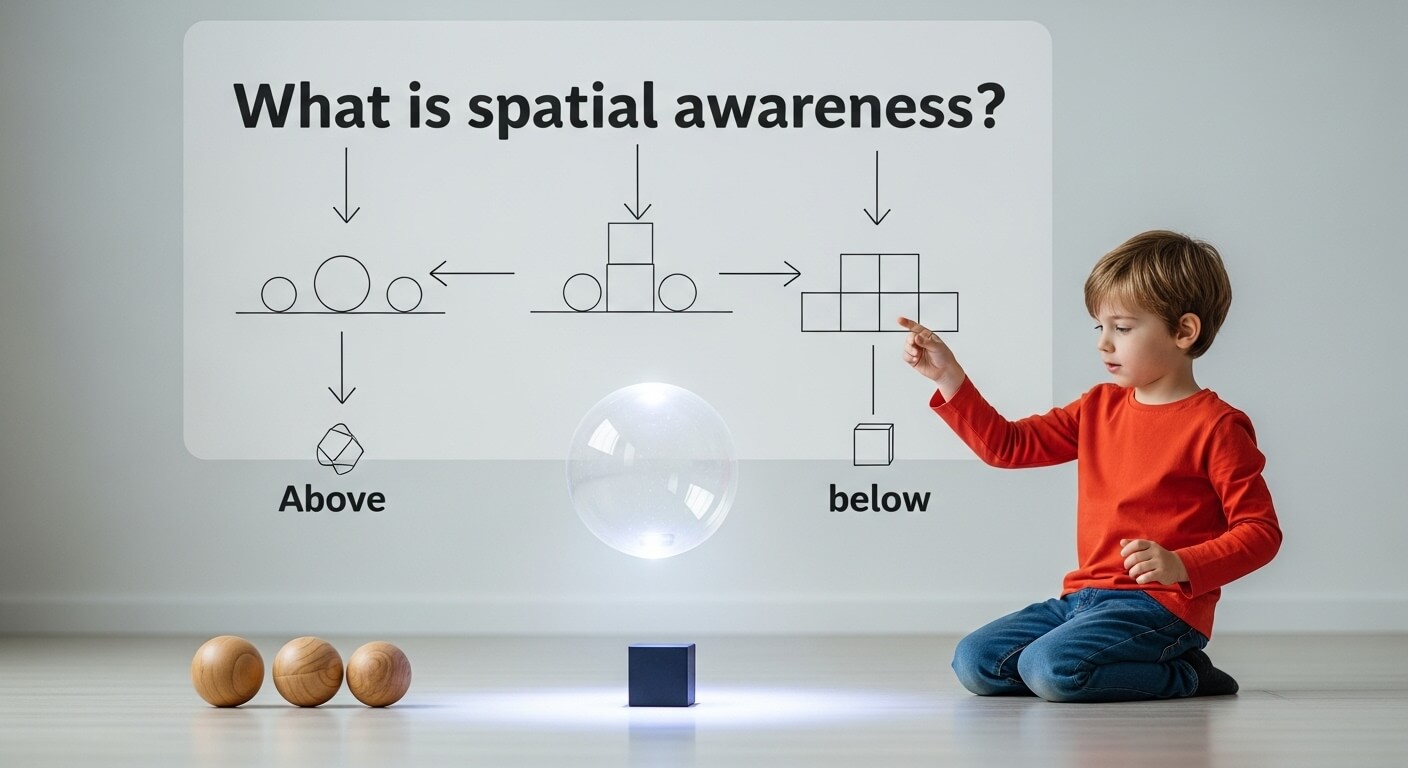
Spatial perception is a fundamental cognitive process that allows us to interpret the world around us. It involves understanding an object's key characteristics—its distance from us, its size, its shape, and its orientation. This ability to construct a rich, three-dimensional understanding from two-dimensional visual inputs is a complex feat of neural processing.
What Is Spatial Awareness?
Simply stated, spatial awareness is your brain's ability to understand and cope with the space around you. It's your mental 3D modeler and GPS combined. It's being attuned to:
- You in space: Where your own body is.
- Things in space: Where other objects are.
- How they're connected: The distance, depth, and direction.
It's what allows you to grab a ball, gauge if you can make it in the street before the light changes, or interpret a map and translate it into the real world.
How Does It Work?
The significance of spatial awareness extends far beyond basic motor function; it is a critical predictor of achievement in numerous professional and academic fields. Repeated research has demonstrated high ability to do well in space and success in science, technology, engineering, and mathematics (STEM). For instance, one of the best-known longitudinal studies, published in Psychological Science, has demonstrated that the tested spatial skills at age between 6 and 13 months were a robust predictor of later innovation and STEM achievement, once verbal and math skills were controlled for.
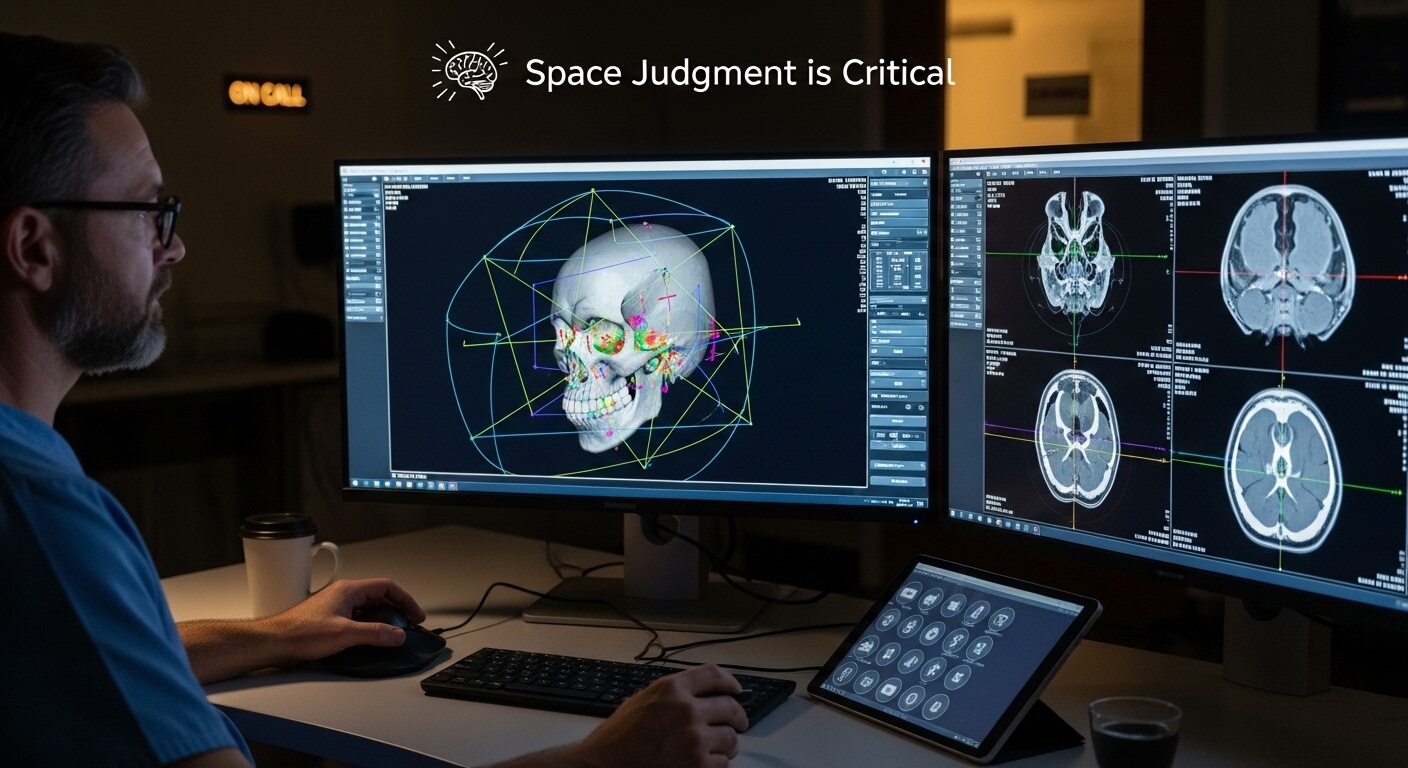
Space judgment is critical in medical settings. Radiologists must distinguish three-dimensional anatomical arrangements from two-dimensional image slices, and surgeons employ sharp spatial judgment to perform minimally invasive surgery. The necessity for this skill set justifies why space aptitude tests are routinely included in these highly specialized profession testing.
Neuroanatomical Substrates of Spatial Processing
The spatial awareness neural system is networked but greatly dependent on a network that has its core in the posterior parts of the brain. The parietal lobe, especially the right hemisphere, is most important for the processing of spatial relationships and for directing visually guided action. It is in coordination with the occipital lobe as this will process the vision, and consolidates information with the hippocampus, which is most important for spatial memory and navigation, commonly known as cognitive mapping.
The National Institute of Neurological Disorders and Stroke (NINDS) has a lot of information regarding how these regions of the brain are involved in total cognitive processes, including spatial processing. Injury to such regions - from a stroke or trauma- will produce the syndrome of spatial neglect, where the patient suddenly cannot process or pay attention to stimuli coming from one side of their space.
The Impact of Compromised Spatial Perception
Lack of this essential skill can have extensive and deep repercussions on daily functioning and professional aspirations.
- Navigation Challenges: Individuals will struggle with tasks most individuals assume, such as reading maps, comprehending directions, or even navigating well-known areas without getting lost.
- Practical and Professional Constraints: Poor spatial perception may be expressed as a problem with efficiently organizing things at home or in the workplace. It can also be a formidable obstacle to pursuing careers that depend to a large extent on these abilities, such as architecture, engineering, design, surgery, or flying, where a miscalculation of distance or dimension can be critical.
- Social Implications: This deficit can carry over into social relationships. Reading non-verbal communication—body language, personal space, and subtle facial expressions—relies on spatial awareness. Difficulty here can lead to social confusion, anxiety, and a withdrawal from social contact, with increased difficulty in forming and maintaining relationships in the long term.
The Malleability of Spatial Skills: Evidence for Training
One of the enduring questions in cognitive psychology is whether spatial ability is a fixed trait or a malleable skill. One big meta-analysis of 217 studies concluded that spatial skills are highly responsive to training. The research, published in the Journal of Educational Psychology, found that training programs—often with tasks like mental rotation, spatial visualization, and video game-based navigation—yielded large, long-lasting gains and, notably, these gains transferred to improved performance in STEM domains.
Practical methods for enhancement extend beyond formal training. Engaging in activities that require mental manipulation of objects, such as learning technical drawing, playing strategic 3D video games, or practicing certain sports like rock climbing or tennis, can effectively engage and strengthen these neural pathways over time.

Conclusion
Spatial ability is not just an ancillary skill but a core component of human intelligence of extensive value for intellectual attainment, professional capacity, and daily functioning. Its grounding in specific networks of the brain highlights its biological basis, and the robust evidence for its trainability offers support for optimism regarding the enhancement of intellectual capabilities. Appreciation of this skill says much about the complex character of the human brain and its remarkable capacity to represent and engage the world around it.
Disclaimer
Any assessments and their associated content on this website, regardless of date, are not intended to replace direct medical advice from your physician or other professional. If you experience severe or persistent symptoms, please consult a licensed mental health professional or healthcare provider.