

How to Be More Confident: A Practical, Game-Based Approach You Can Start Today

Sophia Woods Editor / Jan 13, 2026
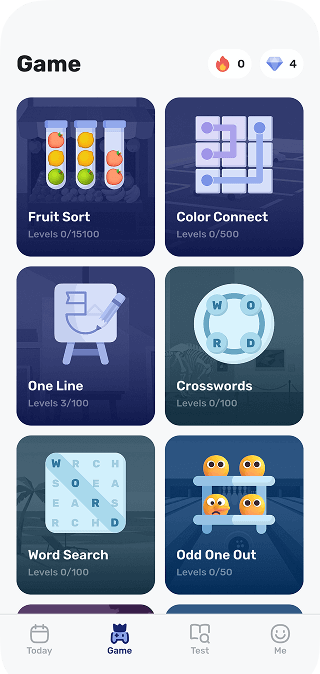
Confidence isn’t some magic trait—it’s built from proof. In other words: "I can handle this because I’ve handled something like it before." The quickest way to grow it is to stack believable, bite-size wins you can see and measure. That’s where brain games shine: they give you clear goals, instant feedback, and progress you can actually track, and are also playable!
Reviewed by Ron Spinabella, Editor in Chief



The loop of confidence: action → evidence → belief
Action: Do something slightly challenging. Pick one situation where you want a boost—speaking up in meetings, introducing yourself, asking for help, presenting ideas—and narrow it to the first minute. Most confidence problems live in the opening moments. Master those, and the rest gets easier.
Evidence: Observe the outcome (score, time, streak). Games turn improvement into numbers. Even tiny gains—solving a pattern faster or remembering one more item—signal to your brain that your effort pays off. That "micro-win" rewires self-belief.
Belief: Update your self-story: "I’m someone who improves."
Repeat this loop daily and your confidence stops being a wish and becomes a pattern.
A 7‑day confidence kickstart
Day 1: Cultivate positive emotion on purpose
Positive emotion isn’t fluff; it’s fuel. When you create tiny sparks of gratitude, pride, or curiosity before a challenge, your brain widens its attention and you feel more capable. Here are quick ways to generate that lift:
- Savor small wins. After a task, name three things that went even slightly well. "I spoke a bit slower; I asked one good question; I stayed in the room." This trains your attention to notice progress, not just flaws.
- Practice gratitude that’s specific. "I’m grateful that Sam nodded when I explained that point." Specific beats general because it feels real.
- Use "better next time" instead of "I messed up." One tweak per attempt keeps growth tangible: "Next time I’ll pause after the first sentence."
Day 2: Micro-wins
Choose one puzzle you enjoy. Play three short rounds.
Goal: Improve by a tiny, specific metric (e.g., +1 stars or +100 points).
Capture the win (screenshot or journal line).
Day 3: Pre-performance routine
Before each round, do a 30‑second reset: inhale 4, exhale 6, shoulders down, chin up.
This calms the nervous system and prevents "panic play."
Day 4: The difficulty ladder
Start on an easy level. When you’re hitting around 80% accuracy, step up a rung. If you fall below 70%, drop back down. That isn’t quitting—it’s smart pacing that keeps you in the learning sweet spot.
Day 5: Coach your inner voice
After each round, ask yourself out loud: "What worked? What’s one tweak for next time?" Swap "I’m terrible" for "Next time I’ll break the pattern into threes."
Day 6: Friendly competition and social proof
Share a goal with a friend or hop onto a leaderboard. Pick a clear metric together (like today’s fastest time). Confidence is contagious when you see the people around you improving too.
Day 7: Review and reset
Review Day 1 to Day 7. Write three sentences: "I improved at…", "The habit that helped was…", "Next week I’ll focus on…"
Choose one new weekly target (e.g., +5% on Pattern Logic).
Train your body to signal confidence
Your brain reads your posture like a headline. A steady exhale, open chest, and eyes level tell the threat system to stand down. You don’t have to win an argument with your anxious brain. You just need to redirect it toward the next helpful action. Like:
- Name it: "I’m worried I’ll stumble."
- Normalize it: "Nerves are normal. This is one rep."
- Act: "Open my notes. Say the first line."
If your mind spirals, anchor back to the body: deep breath, eyes level, speak slower. Pace is a confidence signal you control.
Final thought: Confidence is earned, playfully
You don’t talk yourself into confidence; you build it through consistent, visible wins.
Brain games make the process fun and easy to track. Spend a few minutes each day, aim for tiny wins, and let the numbers reshape your story.
Disclaimer
Any assessments and their associated content on this website, regardless of date, are not intended to replace direct medical advice from your physician or other professional. If you experience severe or persistent symptoms, please consult a licensed mental health professional or healthcare provider.