

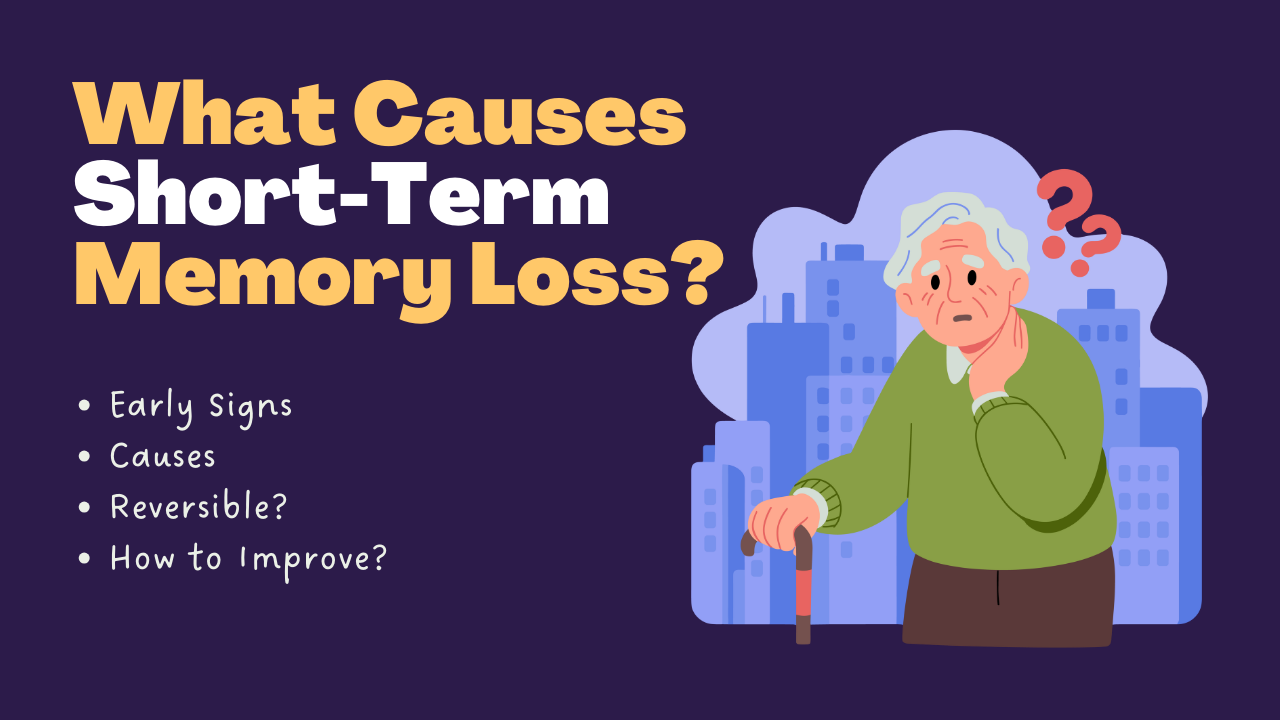
What Causes Short-Term Memory Loss?

Rebecca Gayle Contributor / Jun 30, 2026
Short-term memory loss refers to difficulty retaining recently learned information. While mild changes can occur with aging, persistent or progressive impairment may indicate an underlying medical condition.
Reviewed by Ron Spinabella, Editor in Chief


What Is Short-Term Memory Loss?
Your brain's capability to temporarily store and access information is identified as your short-term memory. When someone has difficulty retaining newly learned information, they are experiencing short-term memory loss. For example, a person may forget what was said moments earlier and be unable to recall it.
The use of short-term memory is needed in everyday activities that require keeping track of small amounts of information for only short periods of time, such as remembering visual patterns.
Early Signs of Short-Term Memory Loss
Short-term memory loss may occur with normal aging, but it can also result from medical conditions or medication effects. Recognizing early changes and determining whether they reflect normal aging or an underlying condition is important.
1. Early Signs
Early short-term memory impairment often presents as:
- Increasing difficulty retaining newly learned information
- Greater reliance on written reminders
- Repeating questions without awareness
These changes may be subtle at first and are sometimes noticed by family members before the individual recognizes them.
2. Mild Cognitive Impairment vs Normal Aging
Distinguishing expected age-related changes from mild cognitive impairment (MCI) is essential. According to the National Institute on Aging, MCI involves measurable cognitive decline beyond normal aging, without significant loss of independence.
Feature | Normal Aging | Mild Cognitive Impairment |
|---|---|---|
Frequency of lapses | Occasional | Increasing over time |
Recall with cues | Often improves | Limited improvement |
Progression | Stable | Gradual decline |
Independence | Fully preserved | Largely preserved |
Not all individuals with MCI develop dementia, but the risk is increased.
3. Forgetfulness vs Dementia in Relation to Early Memory Loss
Forgetfulness alone does not equal dementia. Dementia affects an individual’s ability to carry on independently due to progressive loss of cognitive function. Although early symptoms include short-term memory deficits, other cognitive functions such as reasoning, judgment, and behaviour are also involved.
Dementia can therefore be distinguished from simple forgetfulness by comparing the degree of functional impairment and how the individual continues to decline over time.
What Causes Short-Term Memory Loss?
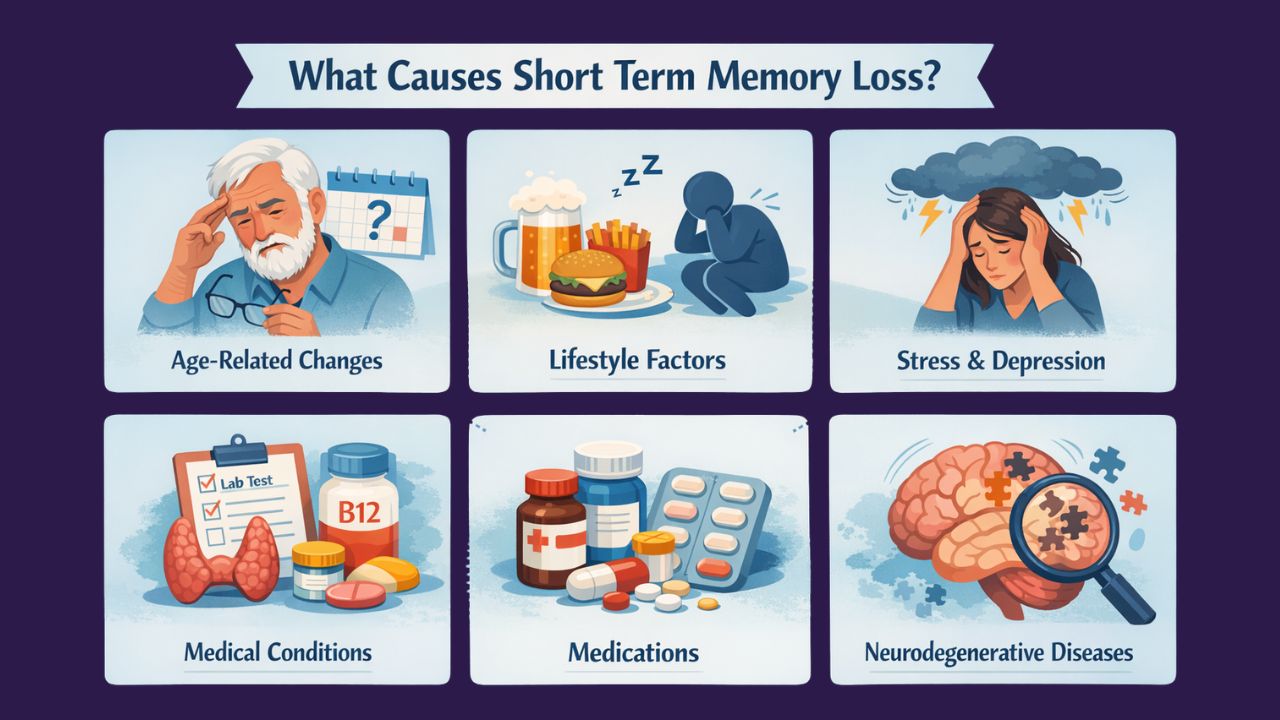
Short-term memory loss may result from multiple categories of factors. Some are reversible; others are progressive.
1. Changes Related To Age
The processing of information and remembering might become gradually slower with age. These changes are mostly stable and won’t interfere with one’s ability to live independently.
2. Factors Related To Lifestyle
Sleep deprivation, low levels of physical activity, poor cardiovascular health, and excessive alcohol use can negatively impact memory functions. Of these four factors, sleep deprivation can significantly reduce the ability to consolidate memories effectively.
3. Psychological Factors
Chronic stress, depression, or anxiety may cause lowered concentrations and reduce short-term recall. By treating the underlying psychological condition, cognitive symptoms often improve.
4. Reversible Medical Conditions
Certain medical conditions may contribute to memory impairment and are often treatable.
Examples include:
- Vitamin B12 deficiency
- Hypothyroidism
- Abnormalities in metabolism
- Sleep apnea
Laboratory testing may help identify these conditions.
5. Medication Effects
Some medications, including sedatives and anticholinergics, produce cognitive side effects, especially in older adults. A thorough medication review is a significant aspect of the assessment process.
6. Neurodegenerative Disorders
A progressive decline of short-term memory can be associated with mild cognitive impairment, Alzheimer’s Disease, and other dementias. All of these conditions usually worsen and may also affect multiple cognitive domains.
Age-Related Differences in Contributing Factors
The likelihood of specific causes varies by age group:
| Age | Common Contributing Factors |
|---|---|
| 20–40 | Stress, sleep deprivation, anxiety, substance use |
| 40–60 | Chronic stress, metabolic disorders, cardiovascular risk factors |
| 60+ | Mild cognitive impairment, Alzheimer’s disease, vitamin deficiencies, medication effects, and sleep disorders |
Age alone does not determine cause, but risk profiles differ.
Can Short-Term Memory Loss Be Reversed?
Reversibility is determined by the cause of the memory issue.
Conditions like sleep problems, anxiety, or drugs can create temporary (reversible) problems in short term memory, and the short-term memory improves once these conditions are treated.
Memory loss from neurodegeneration (ex. Alzheimer’s) is not reversible; however, early intervention can assist in early management/delaying the progression of decline.
Before concluding the memory condition is permanent, there must be a determination of the cause with a medical evaluation.
When to Seek Medical Evaluation
Medical evaluation is recommended if there are memory problems:
- Progress over time
- Interfere with daily functioning
- Cause disorientation
- Affect financial management
- Occur alongside behavioral or judgment changes
In general:
- Occasional, stable lapses that do not worsen over time are more likely to reflect normal aging.
- Memory changes that gradually worsen or are noticed by others should be evaluated by a healthcare professional.
Early assessment increases the likelihood of identifying reversible causes.
How Memory Loss Is Evaluated
Clinical assessment may include:
- Medical and medication history
- Laboratory testing (vitamin B12, thyroid function, metabolic markers)
- Cognitive screening assessments
- Neuroimaging when clinically indicated
The purpose of evaluation is to distinguish normal aging from reversible conditions and neurodegenerative disease.
How to Improve Short-Term Memory
Improvement depends on the underlying cause. When short-term memory changes are related to sleep, stress, medical conditions, or medications, addressing these factors may help improve memory performance.
- Cognitive Stimulation: Doing things that stimulate your brain often helps you do better with remembering things you have previously learned, such as playing brain challenge games.
- Exercise improves your brain: You can maximize the benefit of aerobic exercise by doing at least 150 minutes per week.
- Sleep Optimization: Getting enough sleep enhances your ability to consolidate new memories.
- Healthy blood pressure, sugar, and cholesterol: Good health is directly tied to overall brain health.
- Social interaction: Interacting socially with other people regularly reduces the risk of having cognitive decline.
FAQ
1. Is short-term memory loss normal with aging?
Mild slowing may occur with aging. Progressive impairment that affects daily functioning is not considered normal.
2. Can short-term memory loss be improved?
In many cases, yes — particularly when caused by treatable medical or lifestyle factors.
3. How is mild cognitive impairment different from dementia?
MCI involves a measurable decline without loss of independence. Dementia includes functional impairment.
4. When should memory problems be evaluated?
When memory decline progresses or interferes with daily life.
References
Disclaimer
Any assessments and their associated content on this website, regardless of date, are not intended to replace direct medical advice from your physician or other professional. If you experience severe or persistent symptoms, please consult a licensed mental health professional or healthcare provider.