

Memory Loss? 7 Best & Free Brain Training Games for Seniors

Rebecca Gayle Contributor / Nov 24, 2025
Do you often forget the name of someone familiar? Do you often forget what you're doing when you turn around? You're not the only one; it's a signal from your brain to exercise. Just as we take a daily walk to maintain our strength, our brains need daily training. Some simple and fun games can keep your mind clear and vibrant. It's not just about memory; it's about ensuring your independence and self-reliance in your later years, guaranteeing a high quality of life.
Reviewed by Ron Spinabella, Editor in Chief


How Brain Games Boost Memory in Seniors

When seniors do activities like puzzles, word games, or strategy challenges, it's actually a beneficial brain workout. It can:
Activate brain cells: Your brain can make new neural connections through memory challenges and stimulation.
Strengthen memory: Recall ability can be strengthened by targeted memory training.
Improve recall efficiency: Regular training helps the brain find the stored information more quickly.
So, connecting memory games to real life helps seniors keep their minds active, and it's a long-term investment in brain health and a high-quality life in their later years.
7 Free & Best Memory Games for Seniors
The following games range from simple to complex and are all suitable for playing at home.

1. Double Card Match
Training focus: Visual-spatial short-term memory.
How to play: Put all the cards face down; each set of cards has one or more patterns. You need to find the match by flipping the cards. If the match is successful, they stay face up. If not, try again.
Why it works: This directly exercises your hippocampus (the brain's memory center). The brain needs to create a "mental map" to remember the location and pattern of the card, greatly improving visual recognition and recall ability.
Level up: Increase the number of cards or use cards with more complex patterns.
2. Story relay
Training focus: Episodic memory, verbal memory, and working memory.
How to play: Play with your family or friends. One person starts by saying a sentence, such as "I went for a walk in the park..." The next one must repeat the previous sentence and add content, such as "I went for a walk in the park and saw a cute dog..." Repeat the process.
Why it works: It trains your brain with a logical and visual story. This "narrative memory" is closer to the brain's natural way of working while also strongly challenging working memory capacity.
3. What do I see in the kitchen?"
Training Focus: Semantic memory.
How to Play: Choose a category in your kitchen, such as "vegetables." Set a timer, such as one minute, and name as many items as you can find as possible.
Why it works: This trains your ability to quickly find the stored words in your brain, helping to keep fluidity and organization of thought.
4. Face-Name Matching
Training Focus: Associative memory
How to Play: Find a party photo, and then try to recall their name. You can make associations, such as "Uncle Wang in a red hat."
Why it works: Connecting abstract names to the concrete faces by story or episodic associations. Scientific research shows that association is one of the most effective ways to improve memory.
5. Number Sequence Memory
Training focus: Working memory and auditory memory.
How to play: Let your family read a sequence of numbers, and then you repeat it. Start with the short sequences, and then gradually increase their length.
Why it works: This is a classic workout for working memory capacities. Strong working memory is understanding complex dialogue and logical reasoning.
6. Jigsaw Puzzles
Training focus: Visual-spatial reasoning, problem-solving, and patience.
How to play: Choose a favorite jigsaw puzzle and start from zero.
Why it works: Jigsaw demands the brain match shapes and colors and think about the parts and the whole. This engages several areas of your brain, especially spatial perception and logical thinking.
7. Brain Training Games App
Training Focus: Visual browsing & information-processing speed, and focus ability.
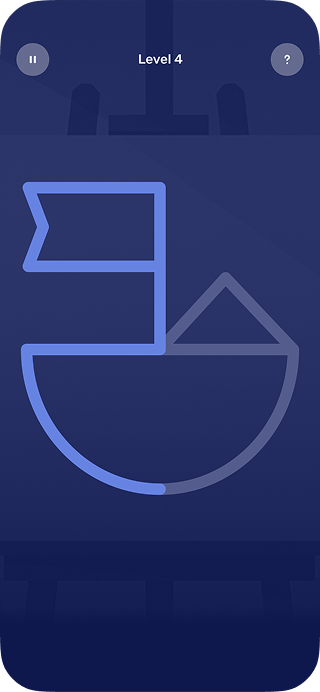
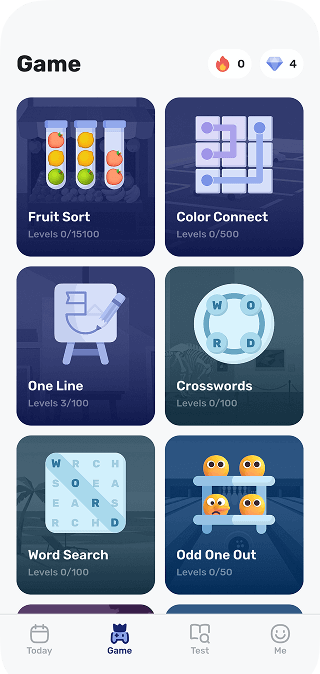
How to play: Many apps (such as Free Brain Training Games) provide specially designed brain games; for example, the "Free Brain Training Games" app. For example, the "Hidden Luck" game is a good way to train visual working memory.

FAQs
Q1: Can Alzheimer's disease be prevented by playing these memory games?
A: While there's no guarantee of complete prevention, there are studies that have shown that regularly doing cognitive training, such as memory games, can reduce risk and delay the cognitive decline. This helps the brain better cope with changes that occur with age.
Q2: How often should I play?
A: At least 3-5 times every week is recommended. Each time, 20-30 minutes.
Q3: Are these games difficult to play?
A: You can start with the simplest ones, such as hidden luck in brain training games. You should focus on engagement and fun, not performance.
Brain health is just as important as body health. These memory games for seniors offer a fun method to exercise your brain and ensure a sharper mind and a higher quality of life in your later years. Start your brain training journey with your friends today.
Disclaimer
Any assessments and their associated content on this website, regardless of date, are not intended to replace direct medical advice from your physician or other professional. If you experience severe or persistent symptoms, please consult a licensed mental health professional or healthcare provider.